Pick ‘n’ Mix Blogs

Mind the gap: Communications skills support for seekers of sanctuary
by Melanie Ferreira (Communications Skills Coach and EAP Practitioner)
“I have learned how to leverage my knowledge, skills, and experience to adapt to a new community” – WordWise Participant
Once awarded with long-awaited refugee status, many displaced people face new challenges, not least being primed for employment at the local job centre. There is often an uncritical expectation that funded ESOL provision takes care of overall linguistic needs of learners of English and if a student is not proficient enough, then more ESOL classes should eventually take care of this ‘deficit’. ESOL provision can supposedly bridge gaps in linguistic capital, covering a multitude of communicative situations the learner will find themselves in, including employment settings.
While this ‘factory’ approach to learning the host language of a country may sound plausible, having good communication skills means a lot more than being proficient in a language or even highly proficient. While it is undeniable that having high levels of proficiency in the English language impacts positively on the lives of seekers of sanctuary in the UK (and indeed their employability), and while there are also many who can comfortably communicate in English even before arriving in the UK, this does not make it easy to navigate the complex systems that govern everyday life and the norms and appropriate behaviours in specific contexts (Young et al., 2022). It takes time to understand and adapt to new environments, and this is not apparent until one finds oneself in a situation that may feel strange or unfamiliar. This kind of thing cannot necessarily be pre-empted in the language classroom, even though it would be great if it was.
Intercultural Communication Strategies
Focusing more broadly on effective intercultural communication strategies can be regarded as an additional way of supporting seekers of sanctuary to navigate new systems, communities and ways of doing in order to enable better integration. Intercultural communication can be understood as managing interactions with others in multilingual and multicultural settings. Let’s view a multicultural setting as one where we interact with others, and any one person has multiple cultural and social identities and worldviews (rather than viewing sociocultural identify singularly in terms of one’s nationality). Linguistic competencies refer to the standard languages, interlanguages and vernaculars that we recognise and speak. This approach borrows from the work of Kramsch (1993), Byram (1997) and Holliday (1999) on intercultural communicative competences (ICC) and intercultural language teaching.
Considering the intercultural interactions of many seekers of sanctuary both in the workplace and socially, often there is a common worry by many about how to converse, how to make friends or how to behave in certain situations. As put by one research participant from a sanctuary background, “it is also important to know how to engage with the new host country ‘cultures’” (Young et al., 2022, p96). Displaced adults bring substantial linguacultural resources with them, and these resources can enable great awareness of ‘reading the room’ or being able to respond to challenging experiences. This viewpoint is very much endorsed by Holliday (1999) in what he calls ‘small cultures on the go’ which is essentially an approach to viewing intercultural communication in language teaching where our interactions are mediated by our previous sociocultural experiences. As adults, we have already experienced many interactional behaviours such as greeting new people or offering help to a friend or making a transaction. Indeed, Holliday’s (2016) framing is that, “We encounter and learn to position ourselves with small cultures such as family, school, other families, all the groups and institutions that we join or interact with. We carry this intercultural competence with us to apply to new cultural locations.”
Another concern that is that a lot of language support seems to cater for lower-level learners of English and, it does not necessarily provide intercultural learning content that is intellectually challenging and stimulating, which in turn affects learner motivation (see Young et al., 2022). With this in mind, I wanted to create a short, easily accessible programme targeted specifically at seekers of sanctuary that addresses ICC, employability and building confidence and self-efficacy. In addition to research on intercultural communication, I draw upon interdisciplinary research in the fields of English as a lingua franca (ELF), multilingual classrooms and forced migrants (Sifakis and Kordia, 2021), trauma-informed pedagogy (Palanac, 2020) and sociolinguistic studies on workplace communication (Darics and Koller, 2018, Words and Action, 2023).
Based upon my own knowledge of such research over many years plus my own teaching practices, I was able to put together a programme that chiefly incorporated evidence-based communicative content in the form of effective techniques and strategies and uses of English plus awareness-raising of already-existing resources within each participant. I wanted the workshops to hinge upon the lived intercultural experiences of the participants and bring to the fore those linguacultural resources that they are happy to share with their group. The aim is to generate a more collaborative and discursive and reflective-rich group learning experience.
Trialling it with RefugEAP
The RefugEAP Programme co-founders generously allowed me to offer my programme to the RefugEAP 2024/25 student cohort so I could trial it online and also continue to shape my resources in response to participant feedback. I was already a tutor on the pre-university academic English skills programme, and on Module 1 the focus is on developing academic literacies. In Module 2 students can choose to attend a range of sessions such as IELTS instruction and academic English language development. With this in mind, we thought adding another choice of sessions that supported communication in everyday settings, less familiar settings and of course, workplace settings might be of interest, seeing as for many, the role of education can be to enhance employability and career prospects. Some of the RefugEAP students also have full-time or part-time jobs and this programme could give them some useful ideas that they could practise in situ and then reflect on.
The ICC strand of the programme comprises 5 workshops and each session equips the participant with practical skills, techniques and approaches. In every workshop there is space to reflect on how we regularly communicate which then leads us to consider a range of linguistic tools we can use to our advantage in many different situations. Workshop 1 focuses on intercultural communication and how to communicate more effectively in multilingual settings and reflect on situations where communication was challenging so we can think about different ways to speak. Workshop 2 looks at various effective communication strategies and Workshop 3 delves into the role of small talk in work contexts. Workshop 4 explores the grammar of politeness; the relationship between grammar and levels of formality in English. Finally, workshop 5 teaches how to craft and use personal branding statements for interviews, CVs and networking. The course incorporates a trauma-informed care approach that encourages social and emotional learning competencies, is culturally competent, takes into consideration the physical, emotional, cognitive and physiological symptoms of trauma both pre and post arrival in a host country and embeds mindful practices to tackle some of those symptoms (see Palanac, 2020 and IRC Healing Rooms, 2023).
Participant Feedback
Overall, the feedback was very positive. There was some concern that perhaps some content may seem too ‘academic’ as had been commented on by some in the refugee sector who I had initially presented my programme too. This point is quite interesting because I see this provision as being quite unique in that it is neither a ‘training’ programme or a language programme, and nor is it an academic project but perhaps something in-between that looks critically at everyday language usage in a way that is accessible and thought-provoking and can be made use of in highly practical terms.
During the trial, students engaged well with the concepts and were able to express how certain ways of perceiving effective communication changed their mindsets about how they themselves communicate, which was my key aim. One participant stated: “The most important realisation I had was that I had mental barriers.” Once one starts to reflect on how they manage and sustain interactions and how they might try out additional strategies, this can have a very positive effect. Having a metalanguage to discuss communication and starting to develop a deeper awareness of one’s own communicative practices can lead to transformative behaviours when dealing or managing interactions that may have previously felt less comfortable or easy. This feedback from a participant supports this: “I have become more confident and aware of how to communicate effectively with others. Additionally, I have learned how to leverage my knowledge, skills, and experience to adapt to a new community.”
Trying out new techniques and reflecting on what works and what doesn’t can make one feel less self-conscious or negative about their own linguistic performance and instead take a more objective and experimental approach to conversing in English, as highlighted by another participant: “I left each session feeling inspired and empowered, equipped with new tools to navigate various social situations with confidence.” It can also be liberating as rather than thinking about what we don’t know, we recognise just how skilled we are and that we have many linguacultural resources to tap into at any moment. This can aid the resilience that already exists in so many displaced people, as well as allow a more critical awareness of what are communicative competences from a more curious and motivational perspective. In the same way that Byram (1997) envisaged his ICC model largely for privileged foreign language students studying abroad to harness curiosity and objectivity when engaging with a new ‘culture’, my course (very humbly) hopes to do something a little similar but for less advantaged people equipped with agency, motivation, professional skills and rich lived experiences.
Future Steps
I would like to expand the workshops and create longer, intensive courses more targeted at enhancing employability. Another interest is making drama more intrinsic to the workshops as it could lead to richer, more experiential learning. In addition, I would like to adapt the workshops for learners whose English language proficiency levels are quite low and also need support to cultivate their human and social capitals. It was actually suggested by my RefugEAP students who felt that it was important to create workshops for very different cohorts who equally need this kind of help. This could be very interesting and that is where perhaps drama could play a key part. Lastly, I strongly believe offering similar courses for those who provide employment or potentially could play a bigger role in encouraging the employment of forced migrants is essential. Monolingual, native speakers, in particular, could benefit greatly from training that is informed by ICC-type frameworks, thus enhancing how we all communicate in workplace settings, and be more sensitive to what makes ‘good communication’.
My website WordWise provides more details about the programme. You are welcome to contact me if you have any questions, would like to know more or discuss possible collaborations at wordwiseteach@gmail.com
References
Byram, M., (1997). Teaching and Assessing Intercultural Communicative Competence. Bristol: Multilingual matters.
Darics, E. and Koller. V., (2018). Language in Business, Language at Work. London: Bloomsbury.
Holliday, A., (1999). Small Cultures. Applied Linguistics, 20(2) pp.237-264.
Holliday, A., (2016). Revisiting intercultural competence: small culture formation on the go through threads of experience. International Journal of Bias, Identity & Diversities in Education, 1 (2). pp. 1-14.
IRC, (2023) Healing Classrooms. Available at: https://www.rescue.org/uk/irc-uks-healing-classrooms [Accessed 12 May 2025].
Kramsch, C., (1993) Context and Culture in Language Teaching. Oxford: OUP.
Palanac, A., (2019). Towards a trauma-informed ELT pedagogy for refugees. Language Issues, 30(2), pp. 3-14.
Sifakis, N. and Kordia, S. (Eds.), (2021). The ENRICH Continuous Professional Development Course. The ENRICH Project.
Words and Actions, (2023). Words and Actions: A podcast about how language matters in business, politics and beyond. Available at: https://wordsandactions12342078.wordpress.com/ [Accessed 10 May 2025].
Young, T.J., Ganassin, S., Schneider, S., Schartner, A. and Walsh. S., (2022). Intercultural Challenges for the Reintegration of Displaced Professionals: A Response to the Language Learning Needs of Refugees in Europe. New York: Routledge.
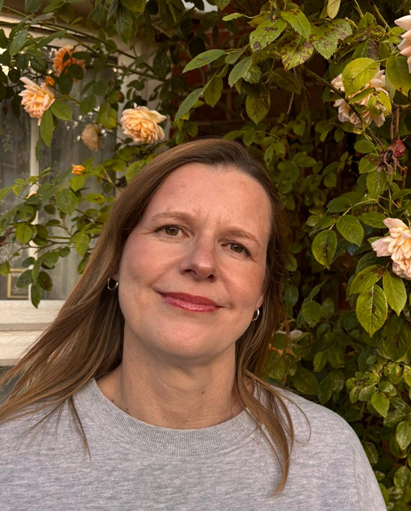
Melanie Ferreira has a background in EFL and has worked as an EAP practitioner in universities in the UK and China and co-ordinates and teaches on the Compass Project pre sessional programme for seekers of sanctuary at Birkbeck, University of London. In addition to this, Melanie supports those seeking asylum or those with refugee status in the UK who attempt to navigate the varying systems open to them, be it education or the workplace. She has a passion for sociolinguistics, social justice, English as a lingua franca, intercultural communication, course creation and digital course design.
 RefugEAP Network
Leave a comment